
It is possible to remember Jonah's journey and miss the question at the end of his book. The closing chapters move from a city's response to God's warning to a prophet's anger at the mercy that follows. Read Jonah 3 and 4 together. Pay attention to the difference between doing what God asks and sharing God's concern for the people involved.
Chapter 3: look for a changed response
Jonah receives another call to go to Nineveh, and this time he goes. The city's people respond to the warning with fasting and humility. The king's instructions include turning from evil and violence. The chapter describes God seeing their changed conduct and sparing the city from the announced disaster.
For personal reflection, notice that repentance is connected with a change in direction. Saying that something is wrong is a beginning; responding may involve stopping harm, telling the truth or making a different choice. Ask what change would make an apology visible in daily behaviour. This is an application of the story, not a way of earning God's kindness through a performance.
Chapter 4: listen to Jonah's objection
Jonah is angry that Nineveh has been spared. His own prayer acknowledges God's gracious and merciful character, yet that character becomes the very reason for his complaint. The tension is uncomfortable: he knows something true about God but resists what it means for people he does not want to see receive mercy.
The story invites a question about our own boundaries of compassion. Is there a person or group whose suffering seems easier to accept because we dislike them? We can name that reaction honestly in prayer. Asking for a merciful heart does not mean ignoring wrongdoing or abandoning the need to protect people from harm.
The plant and the question that remains
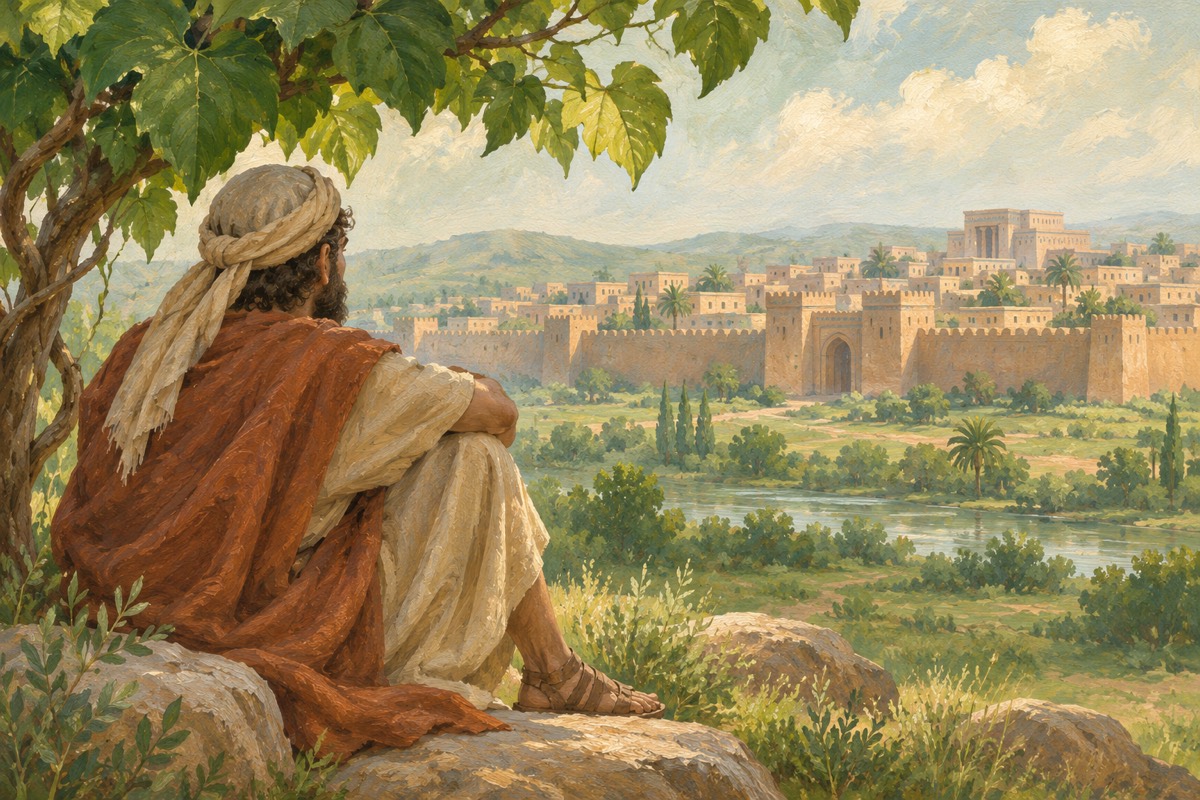
A plant gives Jonah shade, then withers. God uses Jonah's concern over its loss to question his lack of concern for the great city and its inhabitants. The book ends with that question rather than recording a final answer from Jonah. As readers, we are left to consider our response.
One way to sit with the ending is to compare what inconveniences us with what moves us to compassion. We may react strongly to a small disruption while barely noticing another person's need. Choose one modest response that widens your attention: listen before judging, pray for someone outside your usual circle, or support practical care with thoughtfulness. Mercy can begin with seeing a person more fully, while keeping wise boundaries in place.
REFLECT & RESPOND
Make room to listen.
- Where does the story connect repentance with changed conduct?
- Whose need do I find easy to dismiss?
- What is the difference between extending compassion and excusing harm?
One step today
After reading the final question in Jonah 4, sit quietly before answering it. Write one practical way you could respond with greater compassion this week.
A PRAYER TO MAKE YOUR OWN
Bring it before God.
Merciful God, help me recognise the kindness I have received. Show me where resentment has narrowed my concern for others. Give me the honesty to turn from what harms, the wisdom to keep good boundaries and the generosity to desire restoration beyond my own circle. Amen.
Scripture & further reading
This is an original devotional reflection from Upper Room Daily. Scripture references link to the Bible passage; the reflections and applications are our commentary, not quotations from the Bible.
Read Jonah 3–4 on Bible Gateway ↗Have a question or noticed something that needs correcting? Contact the ministry.
CONTINUE IN PRAYER
A moment to pray along.
Explore related prayers and Bible stories, then return to Scripture and consider one response you can practise.